
Bending a 2V geodesic dome out of EMT conduit
JUNE 30, 2026 · BY PAT
The dome is 3/4-inch EMT — the plain metal electrical conduit from the hardware store — cut and formed into struts by hand.
This is going to be the permanent shelter at my camp up north, sitting on the 16×16 platform from the last post. I could've put up a shed. A dome's stronger for the money in wind and snow, packs down to a pile of pipe I can haul in a car, and I just wanted to build one.
I ran the numbers through a dome calculator (Domerama has a good one) and went with a 2V. That gives you two strut lengths, the A's and the B's: 30 A-struts at about 49 inches and 35 B-struts at about 56 inches. Keeping straight which pipe is which and how many I'd cut versus still had to cut is honestly half of why I built BeaglePrep, so yeah, the cut list lived in the app.
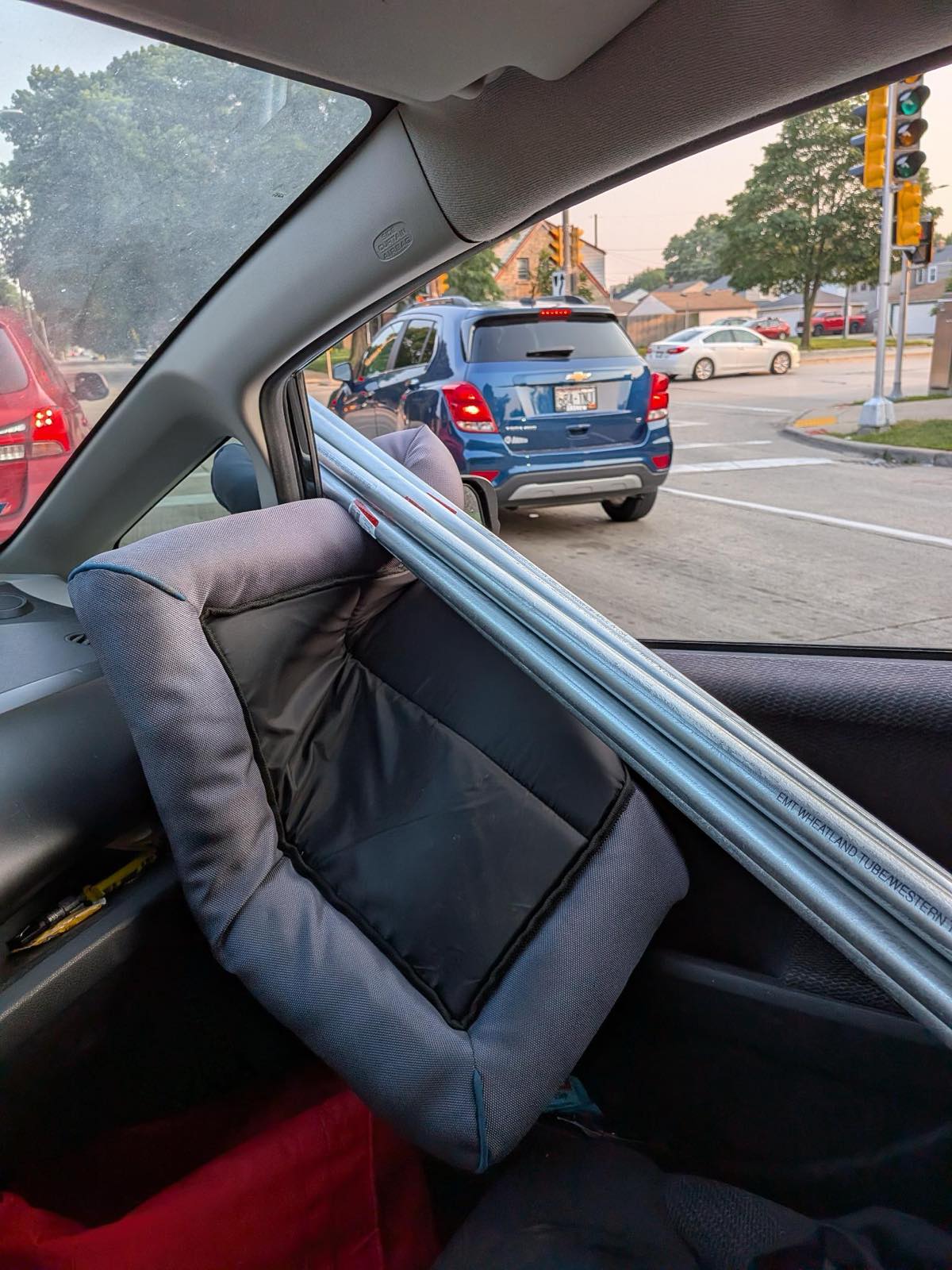
Everything had to fit in a Honda Fit
Real constraint on the whole design: I drive a Honda Fit. Tiny car. Every piece had to be short enough to haul in it — first the raw conduit coming home from Home Depot, and later the cut struts making the drive north. Sizing the build around that little hatchback is part of why the numbers worked out the way they did.
Making the struts
Every strut is the same recipe: cut the pipe to length, flatten the ends, drill a bolt hole through each flat, and bend the flattened tab to the angle where it meets the hub. Simple. Just a lot of it.
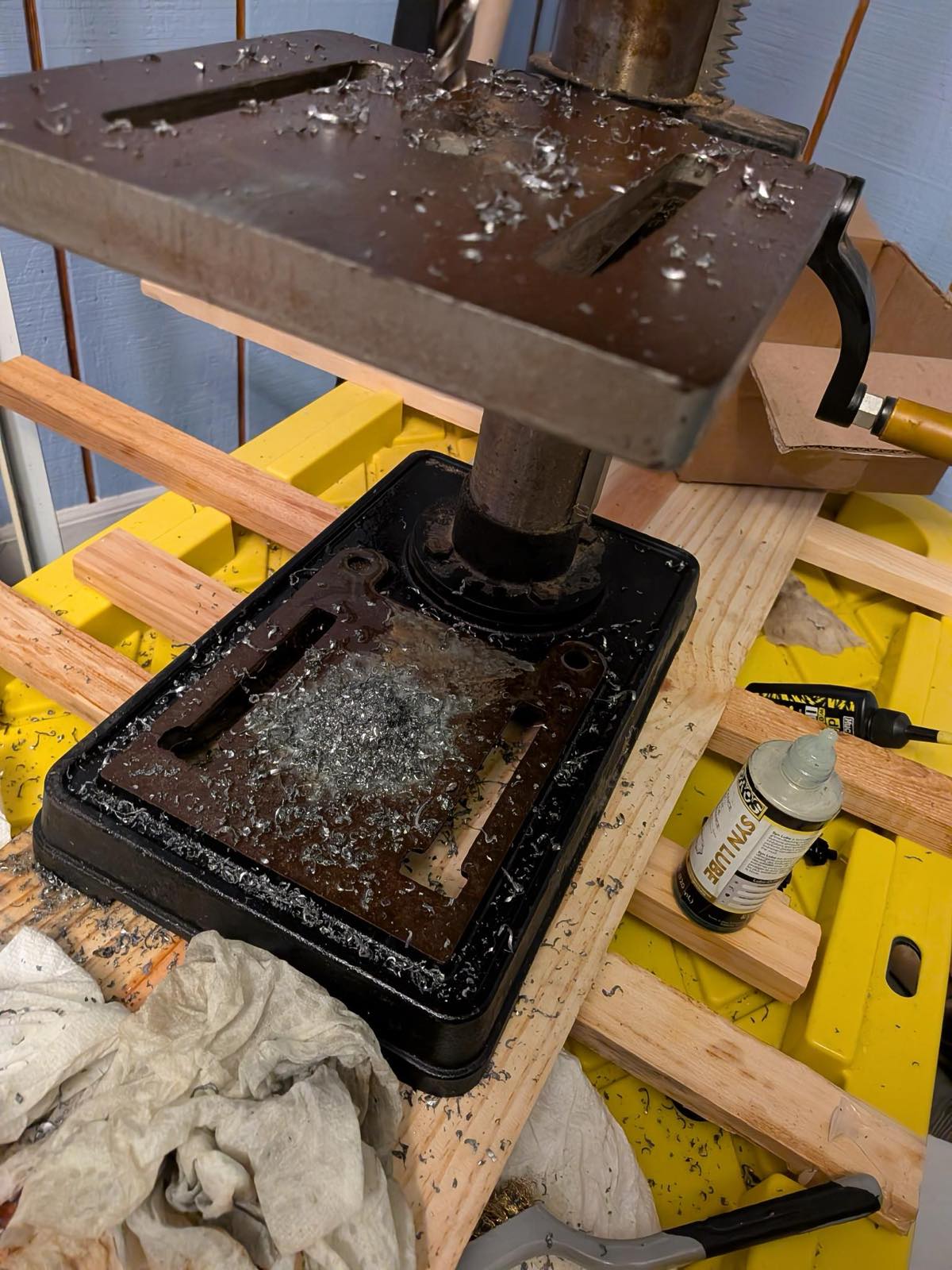
The drilling was the fun part. Cutting and crushing the pipe was the slow part. There's no clever trick — you work through the whole stack, and 3/4-inch EMT is hard on your hands.
Test fit before the 4-hour drive
Before hauling any of it north, I put the base together on the floor of my apartment to make sure the pieces actually fit and my angles were right. Way better to find a bad batch of struts at home than an hour past Crivitz with no way to fix it.
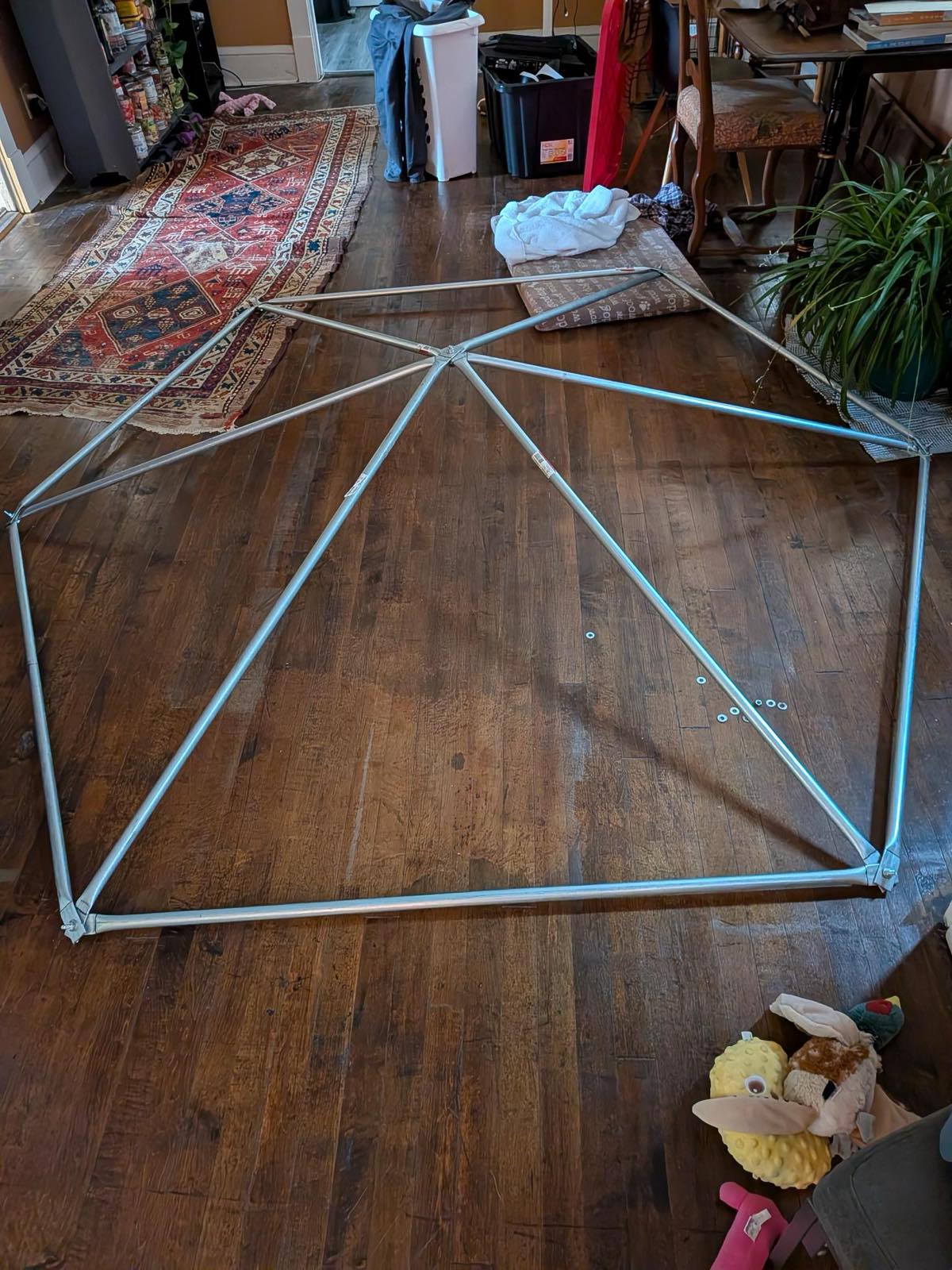
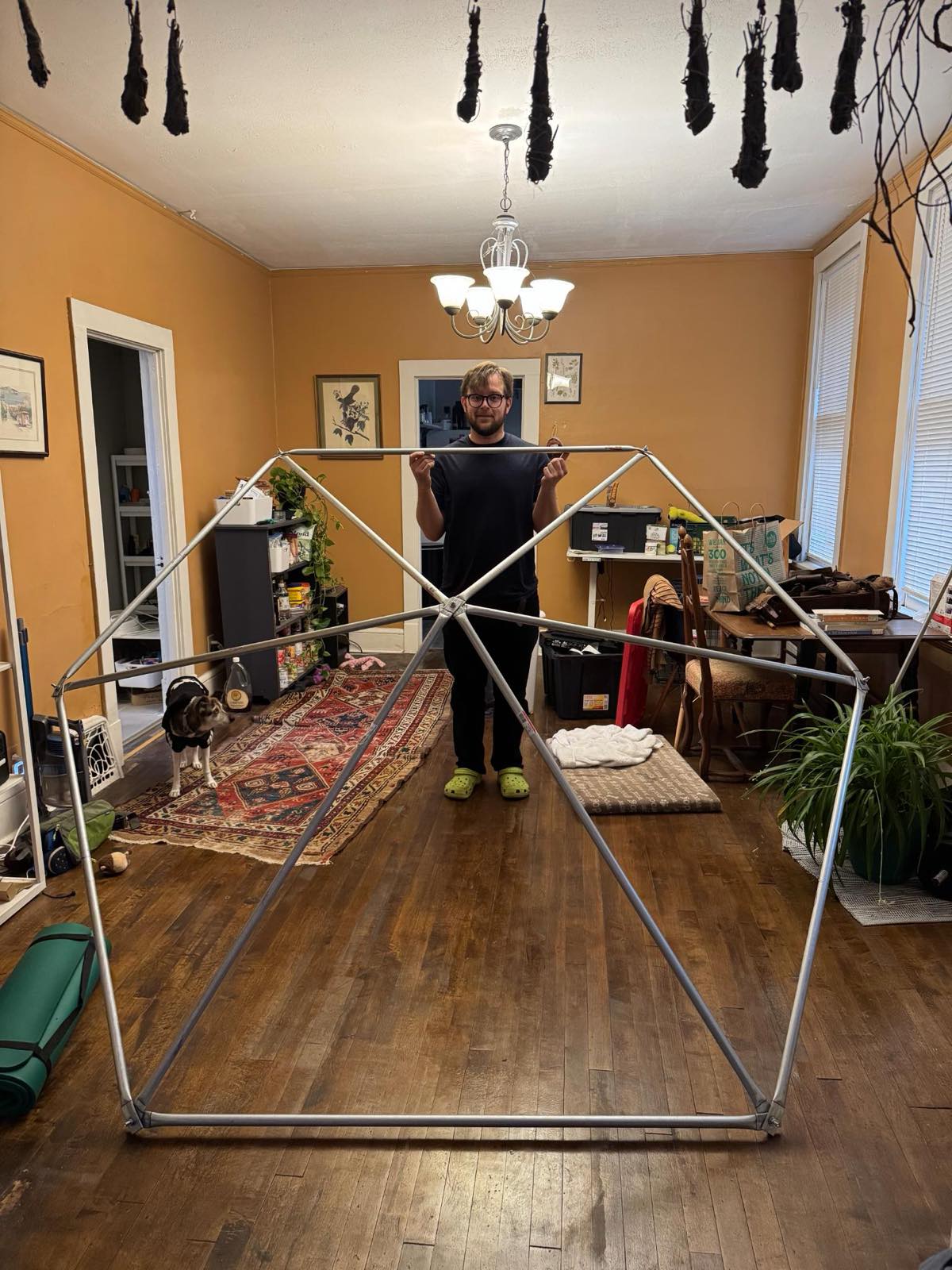
Then it all goes north — in the Fit, naturally — and it's back to sorting on the deck, A pile and B pile, building from the base ring up.
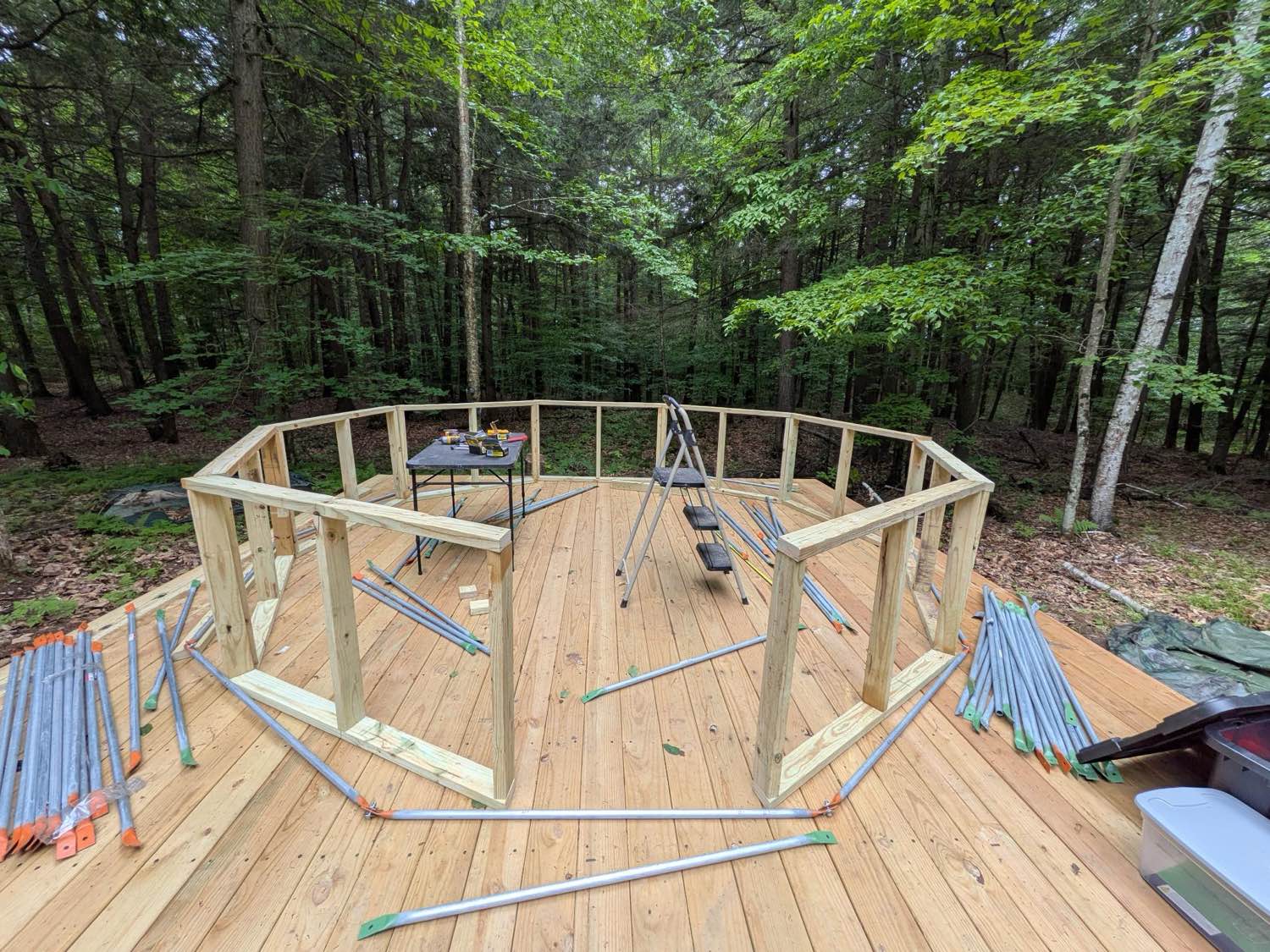
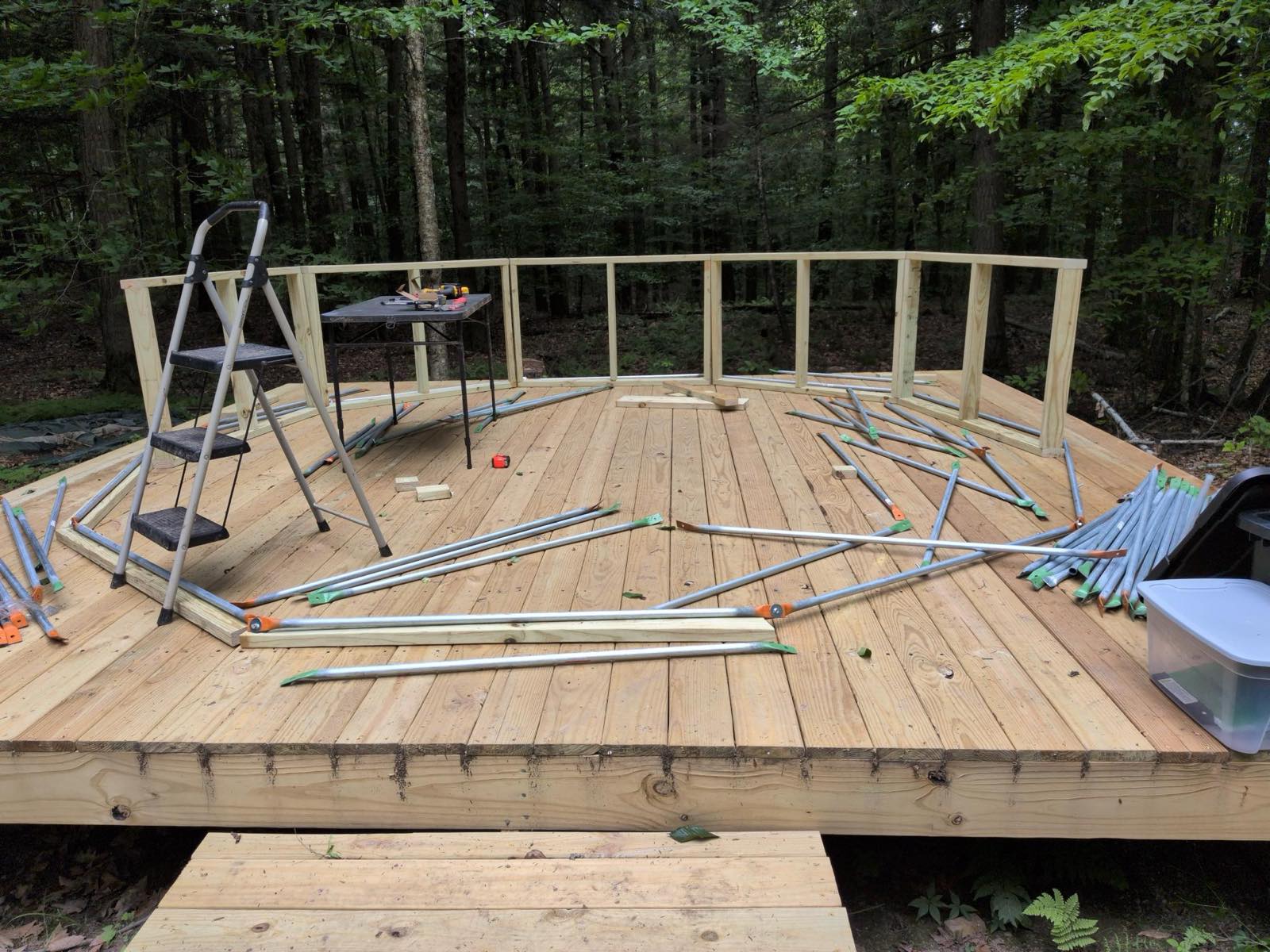
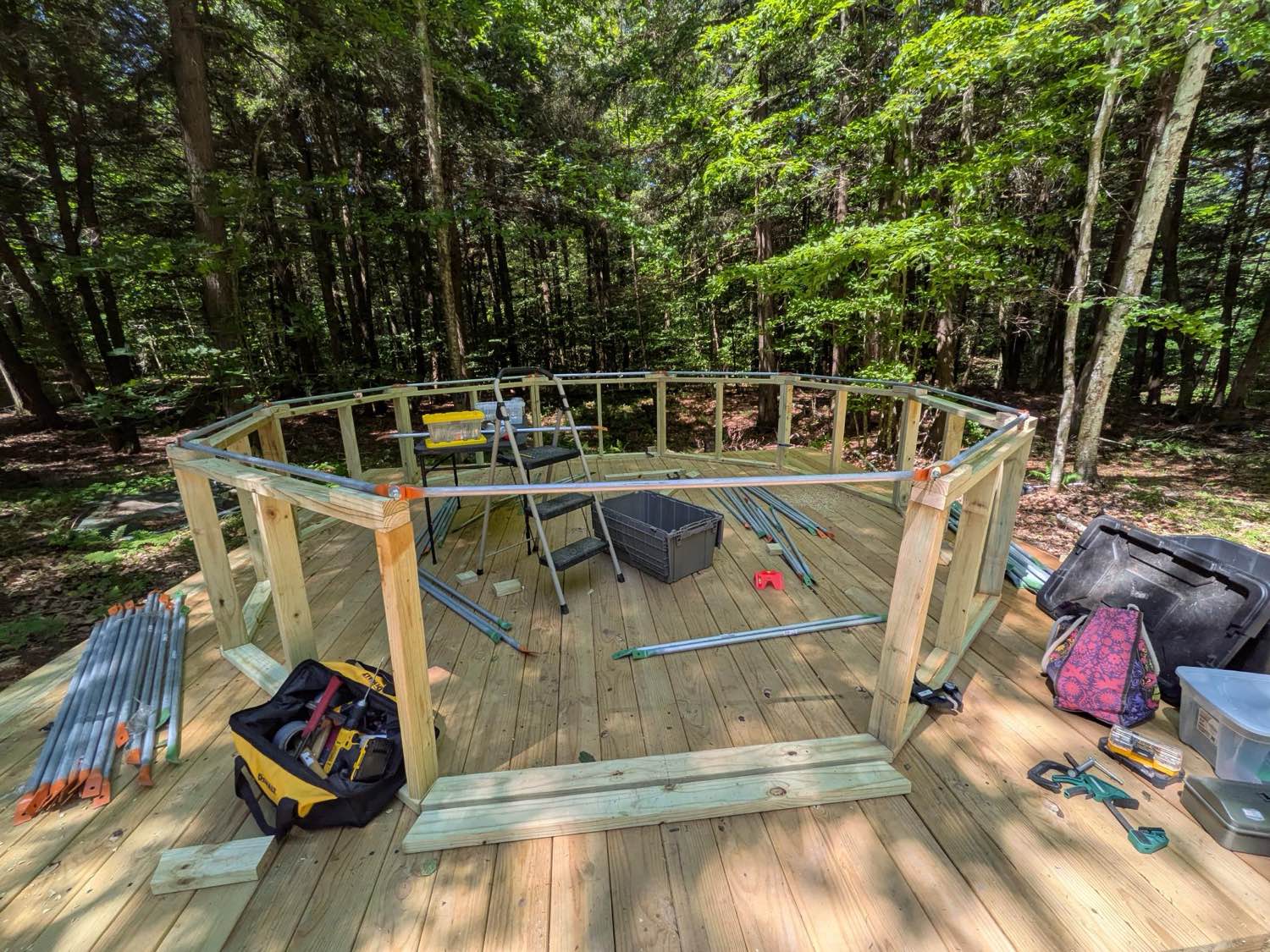
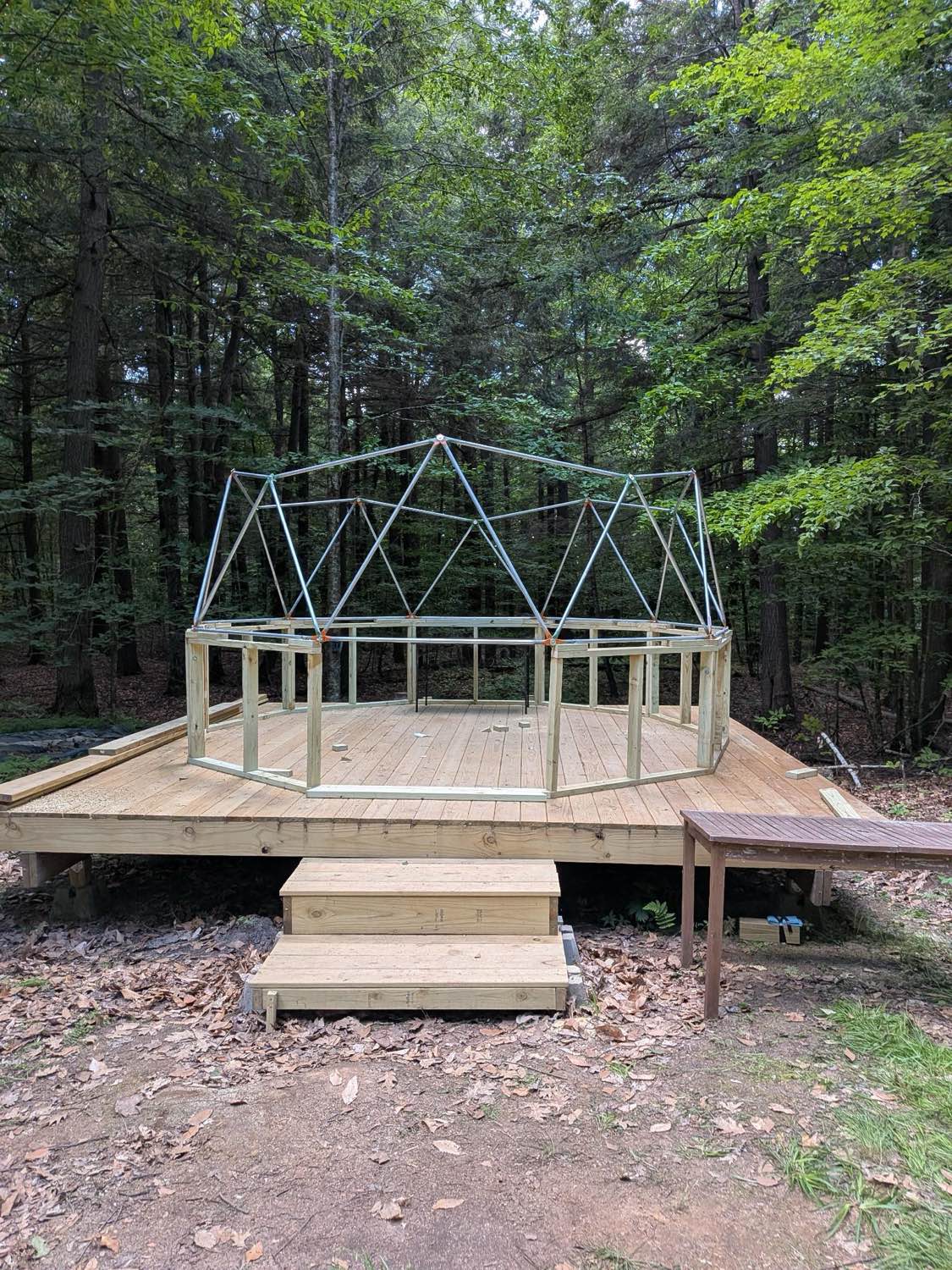
Pipe ran $300–400, so I'm around $2,000 into the whole thing with the deck. The frame's the part everyone photographs, but the skin is what makes it a shelter.
The plan for that is PVC from a recycled billboard — those giant vinyl ad banners. They're cheap or free, already waterproof, and big enough to wrap a dome. It's not on yet — that's a job for the next trip up.